


Active Directory (AD) is a critical part of many organizations’ IT setups, but it’s also incredibly complex. This complexity creates opportunities for both attackers and defenders. Luckily, tools like BloodHound and AD_Miner are here to help. These tools have become popular for exploring and analyzing AD environments, each offering a unique way to uncover vulnerabilities.
Bloodhound
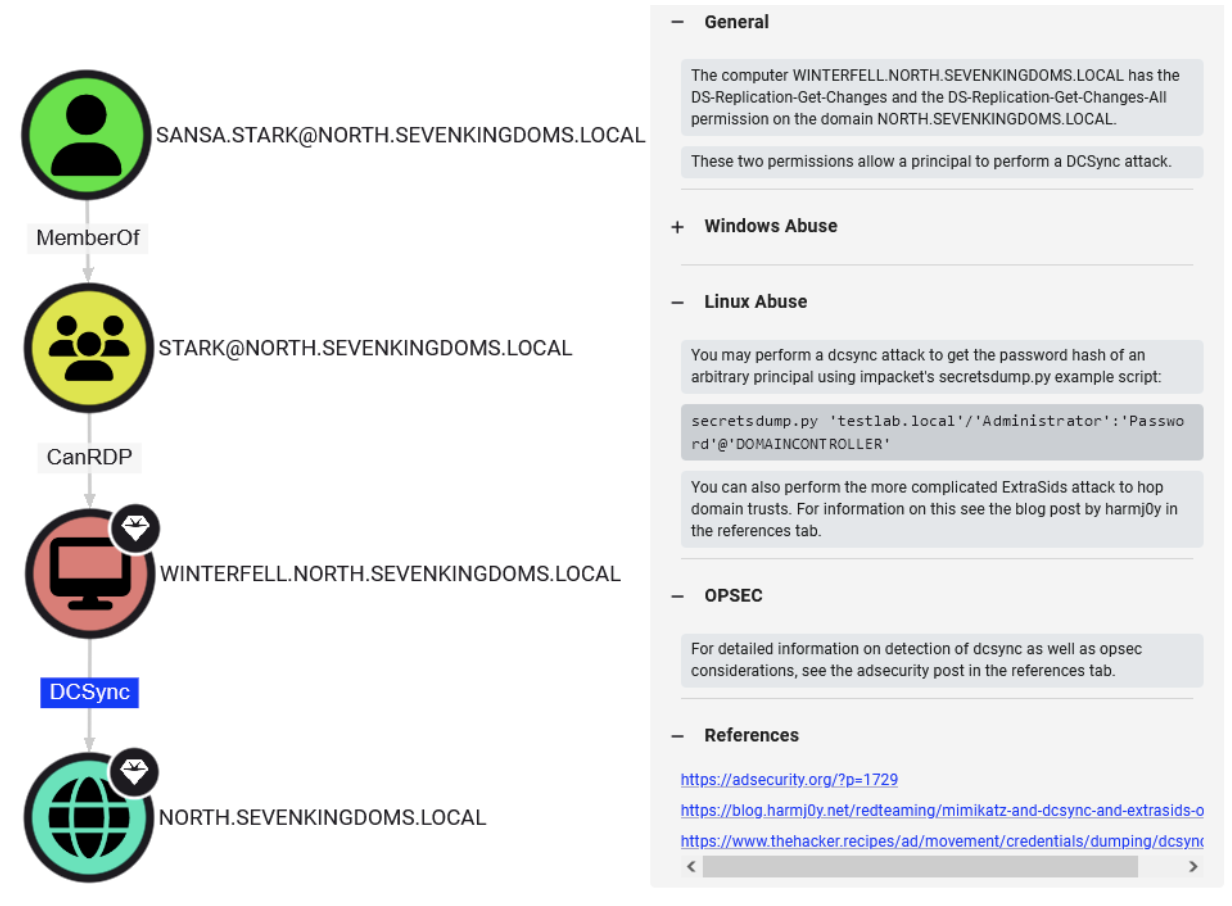
Bloodhound is a well-known tool for penetration testers that maps out attack paths in an Active Directory. Through customizable queries, you can get information about kerberoastable users, services with unconstrained delegation, what the shortest path to domain admin is, and much more. Bloodhound also shows detailed information about how to exploit certain vulnerabilities, with links and references where you can also often find mitigation steps.
AD_Miner
A less known tool, AD_Miner, takes a different approach. Instead of focusing on detailed attack paths and helping the user exploit vulnerabilities, it hooks into the same database that BloodHound uses but presents the information through an easy-to-read dashboard. This makes it simple to get a quick overview of your AD’s security status.
With AD_Miner, you can spot your most critical vulnerabilities without digging through tons of data, and without having to query for specific vulnerabilities. It’s a great tool for admins or security teams who need actionable insights fast, even if they don’t have deep experience in penetration testing.
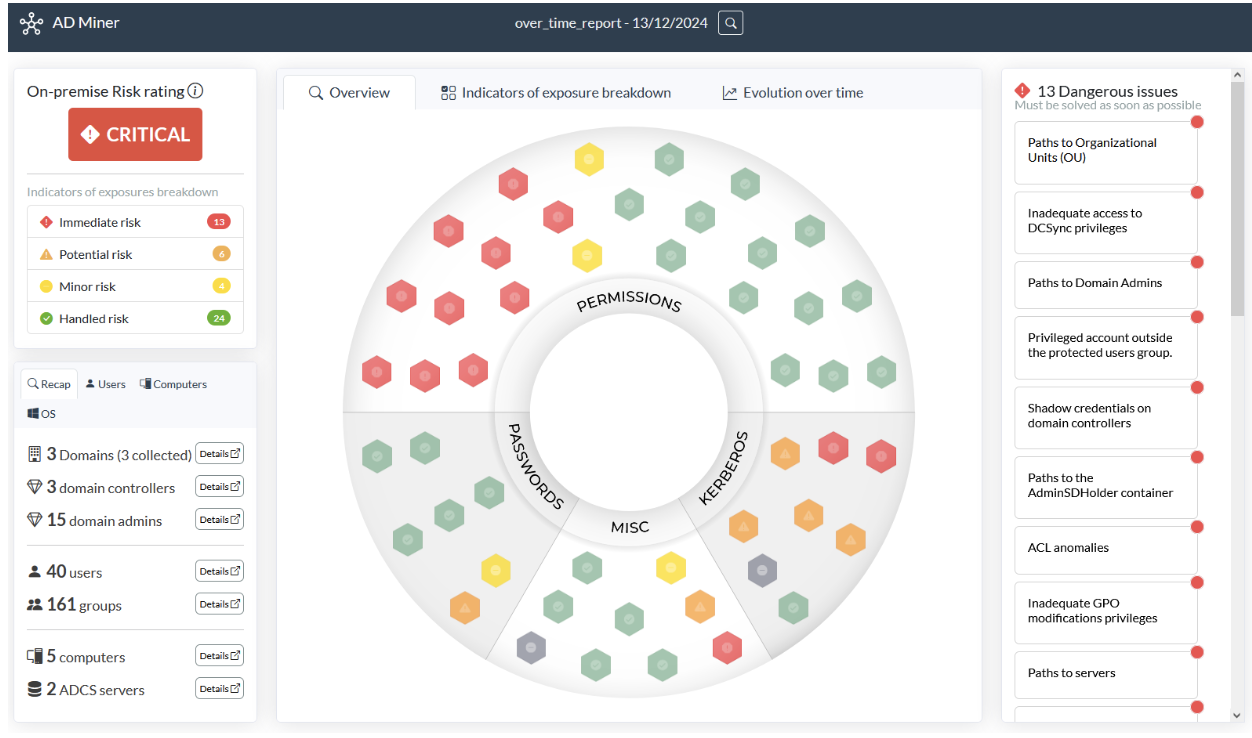
So while both tools have some overlapping functionality, BloodHound and AD_Miner aren’t really competitors; they’re better together. BloodHound digs into the nitty-gritty details, showing you the specific ways an attacker could exploit your environment, while AD_Miner provides a higher-level summary to help you see the overall security picture.
Using both tools gives you the best of both worlds: detailed attack paths when you need them and an overall security assessment when you want a quick check. By using these tools together, you can fortify your AD environment and proactively address potential threats.